
Turning down a promotion: Lucía wanted to keep designing
Everyone starts congratulating her on the offer to lead the team. Lucía asks for a few days to find out which work she would have to give up.
BarbellPin ·
Lucía leaves the meeting carrying a blue folder and a congratulations she has no idea what to do with. Her director has offered her the job of leading the packaging design team. There would be a pay rise, six people reporting to her and a desk by the window. Before she reaches her own desk, a colleague gives her a thumbs up. She smiles back. She has not accepted, yet turning down a promotion already feels like interrupting a celebration everyone else has started.
On her desk sits a cardboard box with a fastening that refuses to work. For two days she has been trying to make a tab survive delivery and open without tearing. She slips a finger under it, pulls gently and gets stuck again. She takes off her coat. For twenty minutes she forgets the blue folder. When the box finally opens in one movement, she calls Marcos over to see. It is her first useful answer, though she does not recognise it yet.

Meeting table with black chairs and a whiteboard. Photo: Slidebean, Unsplash. Unsplash License.
The question missing from the congratulations
At home, her partner asks how much more she would earn. Lucía shows him the offer. They talk about a repair they have been putting off and a trip that never quite happens. The money would help. She likes having her work recognised, too. What she cannot explain is why, after such good news, she has spent the evening finding cupboards to tidy.
“Are you worried you won't be good at it?” he asks. Partly. She has never done staff reviews or arranged holiday cover. But there is another discomfort that imagining herself learning quickly does not fix. She opens the folder and looks for the duties: coordination, progress meetings, clients, budgets. Design appears in a sentence about supervising deliveries. Nothing tells her how much of her own design work would remain.
The next day she asks to talk to Sonia, who is leaving the role to move to another city. They find a café with a wobbly table. Lucía asks what an ordinary Tuesday involves. Sonia tells her about a delivery that collided with two absences, an argument over a deadline and a morning working out costs. She enjoys helping the team untangle those things. She also misses designing without keeping an eye on the time.
Lucía asks what happened to the last project Sonia started as a designer. Someone else finished it. The answer stings, as if Lucía has already lost her cardboard box. Then she feels unfair. Someone needs to do the other work and can enjoy doing it. Her question is whether she wants to spend her own days on it. She does not need to make the job sound unimportant to explain her hesitation.

Laptop, notebook and coffee on a desk. Photo: Lau Clrd, Unsplash. Unsplash License.
A Thursday in someone else's diary
Her director agrees that she can spend a morning alongside Sonia before answering. Lucía brings a notebook and writes less than expected. She listens to a colleague who needs a delivery changed, calls a supplier and joins a meeting where nobody opens any design software. During a break she spots her box through the glass. Marcos is trying the tab with thicker card.
She does not spend the morning watching the clock. She wants to understand the supplier's problem and manages to ask a useful question. A colleague thanks her for listening to the whole explanation. She can imagine learning this job. That makes the decision harder. She cannot settle it by saying she would be unable to do it. She would have to admit that she might be able to do it and still prefer something else.
Back at her desk, she makes two columns. In the first she writes what she would gain: pay, authority to make decisions, new experience. In the second she lists what she would leave behind: developing her own ideas and following them through to the first sample. She crosses out “a quiet life”, which she added automatically. Her current job has deadlines, difficult clients and bad afternoons as well. She wants to compare two actual jobs.
Marcos asks whether the morning went well. She admits she is still unsure. He says he would like to lead a team, though he is unsure whether he is ready. They have done similar work for years without ever discussing different ambitions. Lucía asks which parts appeal to him. For a while they stand beside the box discussing a role that opens a door for one of them and takes the other away from her workbench.

Coffee, notebook, pencil and laptop on a white desk. Photo: Aliona Zahrai, Unsplash. Unsplash License.
An answer with something after the no
On Friday she enters the office with the folder closed. She thanks her director and explains that she wants to keep designing. Her director asks whether the pay rise is the problem. Lucía is tempted to let them negotiate a number and put off the awkward part. Instead she says that pay matters, but her decision is about the work. She describes what she saw that week and which tasks she wants to keep.
The silence is much less comfortable than Monday's congratulations. Her director needs someone in the role and had been counting on her. She says so without becoming angry. Lucía listens without withdrawing her answer. She suggests developing a new packaging range within her current role, with responsibilities they can agree. She does not offer to manage six people behind the scenes while keeping her existing title.
The suggestion is not approved on the spot. They will discuss it when the team's needs are clearer. There is no promise of an equivalent raise or guarantee about future opportunities. Lucía leaves knowing what she has chosen and what she has passed up. When she sees Marcos, she tells him she has answered. He asks whether she is all right. “Yes. And annoyed about losing the extra money.” Both are true.
The following Monday someone asks when she is moving to the window desk. Lucía explains that she is staying where she is. Saying it is difficult once more. Then she opens an email containing a photograph of the first manufactured sample. The tab works. There is a small mark they need to investigate. She enlarges the image, finds her notebook and calls the supplier with a specific question.

Cup of coffee beside a notebook and pen. Photo: Kelly Sikkema, Unsplash. Unsplash License.
That afternoon she puts the blue folder in a drawer. She takes her packaging notebook and leaves a note about the mark on the fastening. Tomorrow there will be work she recognises as hers. There may be doubts as well. She can leave them unanswered for an evening without accepting somebody else's congratulations in advance.
She wants the same clarity when choosing her gym session. In BarbellPin, My routines lets you prepare exercises, sets, targets and rest times; the targets are references, and you record what you actually do when training. The routine guide explains the preparation. Lucía checks her routine and puts her phone in her bag. The box stays on her desk, ready for another test tomorrow.
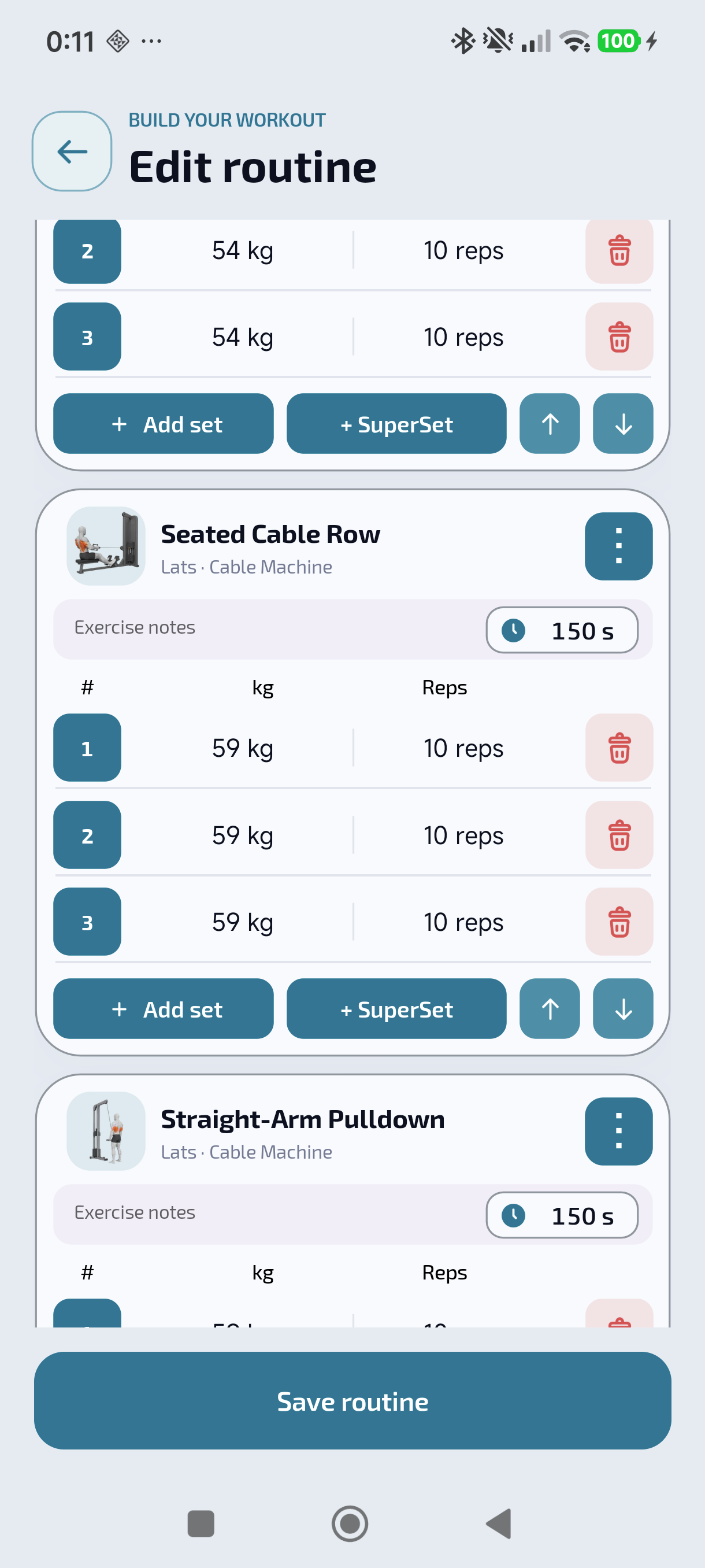
BarbellPin screenshot: routine editor with sets, weights, repetitions and rest. Source: BarbellPin, original screenshot authorised for its website.
Download BarbellPin