
Gym machine taken? How to choose an alternative exercise
Decide whether to wait, change the order of your workout, or swap an exercise. Then leave yourself a record that will make sense next time.
BarbellPin ·
Picture Laura arriving at the gym on a Tuesday with one hour before she has to pick up her daughter from music class. She puts her jacket in a locker and heads for the seated row machine. Someone has just sat down. Another person is waiting beside it with a water bottle, and a third is coming down the aisle. Last time this happened, Laura hovered until the machine was free and ended up putting her jacket back on with half her workout still ahead of her.
“How many sets have you got left?” she asks. Two, says the person on the seat. Then it’s the other person’s turn. Five minutes might fit. Fifteen would mean rushing through the last few sets or arriving late for pickup. On the way in, Laura passed an empty bench. She can think of something to do there, but she has a simpler decision to make first.
See whether a change of order will do
Laura has already finished the exercise that came before the row. A little farther down her workout is another exercise she can set up on the open side of the room. She could bring that one forward and take another look at the machine when she’s done. The rest of her plan would still make sense, and she’d have something to show for the time that would otherwise go into waiting.
That works when the delay looks short and the exercise you bring forward fits comfortably in that spot. If you came in specifically to use that row machine while you were fresh, waiting can make sense. If the only thing you can do next is across a crowded room and requires more gear, switching the order might just give you two queues to watch. Look at the part of the session you most want to keep and the time you actually have left.
You can also finish the rest of the workout and leave the row for another day. Say the queue is still there after your next exercise and the only free equipment is something you’ve never used. You can make that call while there’s still time to do the remaining exercises at a pace you’re comfortable with. When you look back on the session, what you actually did is the useful record.
Look for a substitute you know how to set up
Laura has a bench, dumbbells and room to move. She knows how to do a one-arm dumbbell row with her free hand on the bench. She has done it before and knows how she’ll switch sides without setting the weight down in the aisle. A different piece of equipment might look promising, but if she has to hunt for an attachment or figure out how to adjust a seat, she’ll spend more of her hour getting started.
Try asking yourself three questions when you’re standing there with your water bottle.
- What was this exercise doing in my workout? Laura was looking for a row in the back section of her session. That gives her a more manageable search than looking at every exercise with “back” on its label.
- What equipment is free, and where can I use it? A bench and a dumbbell are enough for the option she has in mind. She also checks that there’s room next to the bench, since a clear bench in a busy walkway might be hard to use.
- Can I set it up and get started without guessing? If you’re unsure, look up the exercise or ask someone who works at the gym. You can keep an unfamiliar option in mind for a day when there’s time to learn it.
A muscle filter helps narrow down the list. Then look at the actual movement, where you’re supported and how you hold the weight. Laura can use the dumbbell row because she knows the setup. Someone who wants to repeat a particular seat and handle position might give the machine another few minutes. Both can make a deliberate choice instead of scanning the floor for whatever happens to be empty.
Write down the change while you remember it
At the end of the session, “row” would be easy to type. Next Tuesday it could mean either the seated machine or the one-arm exercise. Laura writes “one-arm dumbbell row, hand on bench.” If she goes back to the bench, she can find the load she used there. If the machine is free, the last entry for the machine is the one she’ll want to read.
Imagine the machine’s stack showed 55 pounds last week. That number belongs to that machine and its setup. Write down the dumbbell you actually picked up, and record which side you did if that detail helps you remember how the sets went. A few words can save you from having to reconstruct the whole session at the rack.
A one-off change can stay with that day’s record. If the queue is there every Tuesday and you like the alternative, give yourself a second version of the routine to choose from. The same idea works if you’re visiting a gym with different equipment for a week. Check what you’ll have before you go, change the line that depends on the missing machine, and keep the exercises you can still do.
Find an alternative in BarbellPin
On your phone, open your routines and edit the one you want to prepare. Tap Add exercise to open the exercise library, headed Exercises. Search by name or combine Muscle group and Equipment, then open an exercise to see its available instructions and details. To keep a separate version ready, duplicate the original in My routines before editing the copy.
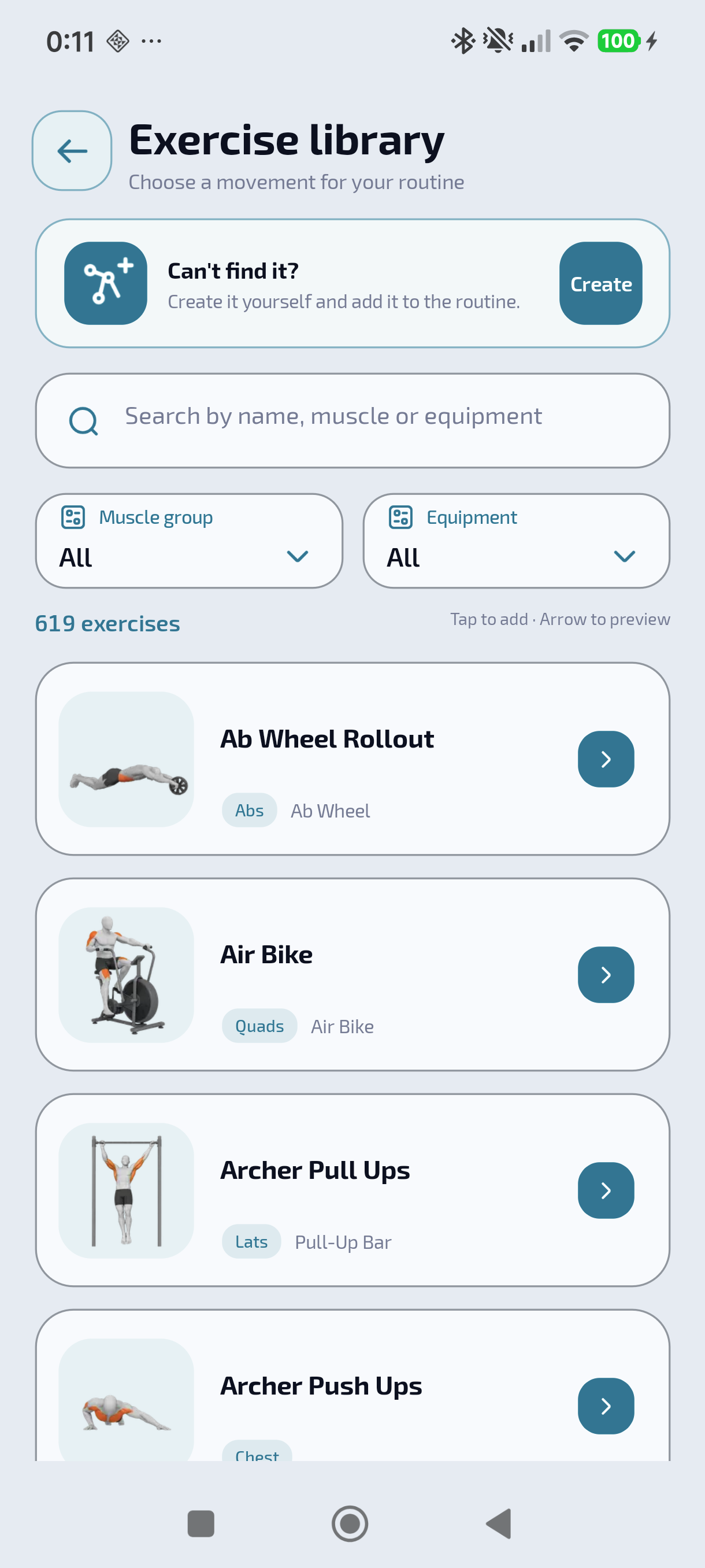
Once you’ve picked the alternative, review the sets and rest periods in the template. When you train, record the weight and reps you actually do.
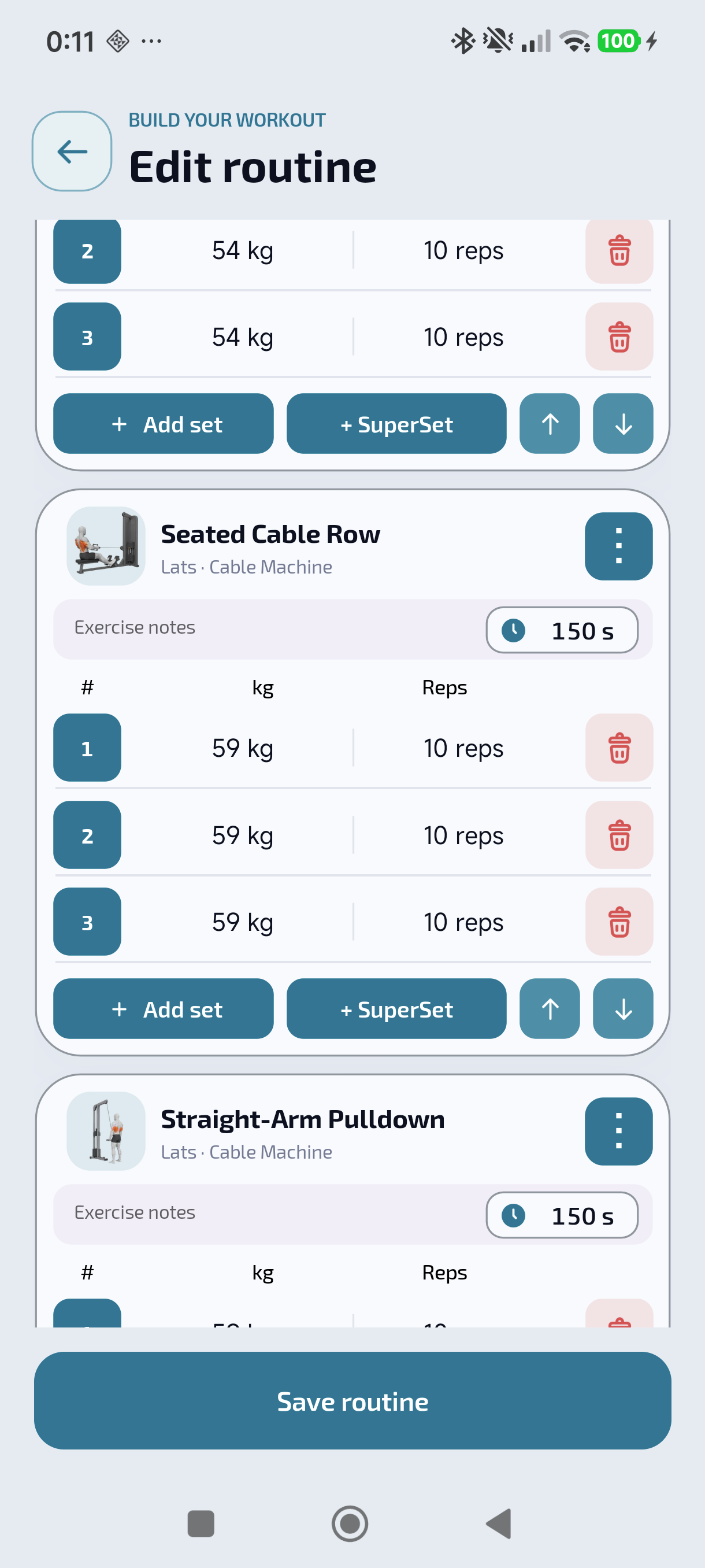
Laura makes it to pickup on time. The next Tuesday the seat is free, so she does her usual row. She still knows exactly what she’ll do if she sees that queue again. You can prepare one option of your own with the exercise library guide.
Download BarbellPin