
Going to the cinema alone: the ticket Inés stopped putting off
Inés has spent weeks waiting for someone to be free. The last screening finds her at the box office, preparing an explanation nobody has asked her for.
BarbellPin ·
Inés reaches the cinema with twelve minutes to spare and a message she hasn't sent. She's typed “Actually, I think I'll head home” in her friends' group chat. One is working, another has visitors and the third has already seen the film. None of them has told her to go home. Even so, going to the cinema alone feels like a decision she ought to announce before buying a ticket.
She's been checking the listings for three weeks. The film follows a municipal swimming pool facing closure and the people who keep coming throughout its final summer. A shot of the empty changing rooms caught her attention. She can't remember which recommendation led her to the trailer. She does remember sharing it on a Monday and receiving several enthusiastic replies that never turned into a date.
Tonight is the last screening she can make. Tomorrow she has an early start; she'll be away at the weekend. A bus passes in the reflection on the box office glass. Behind her, a couple discuss whether to buy popcorn now or later. Inés locks her phone. When her turn comes, she asks for one ticket and starts adding, “It's just that, in the end…” The cashier points to the seating plan. “Where would you like to sit?”

Rows of empty red seats in a cinema. Photo: Seyed Amir Mohammad Tabatabaee, Unsplash. Unsplash License.
A seat without a discussion
Inés usually sits near the aisle because her friend Teresa dislikes being in the middle. This time she looks at the central rows. She chooses a seat she always overlooks when booking for two. The cashier offers a receipt. She accepts and puts it away with unnecessary care, as though she needs some proof of what she's doing.
There's a free bench in the foyer. She could check her phone until the doors open, but takes it out and puts it away three times. She worries she looks like someone whose companion hasn't turned up. Then she notices she's spent several minutes watching other people to see whether they're watching her. A man is trying to fold his coat without letting it touch the floor. A woman searches a rucksack. Everyone has enough to occupy them.
She buys water and looks at the posters. She reads the cast of a film she hasn't heard of. Usually these minutes disappear into deciding where to eat afterwards, handing over tickets or looking for whoever has gone to the toilet. Now she can read all the way down. She can also be slightly bored. Her freedom in the foyer includes that fairly ordinary possibility.
Her sister sends a message about Sunday lunch. Inés replies that she'll check after the cinema. Her sister asks what they're seeing. “Just me tonight,” she types. She waits for another question. Instead, she gets “Enjoy it” and a photo of the dog lying on a trainer. The matter is settled in that other house long before it is settled in Inés's head.

Popcorn machine and prepared bags in a cinema. Photo: Nikoloz Gachechiladze, Unsplash. Unsplash License.
The film began with a sound
The lights are still on when she enters. She finds her row, lays her coat across her knees and moves the water away from the edge of the armrest. The neighbouring seat is empty. For a moment it seems conspicuous. She's about to put her bag there, then leaves it by her feet so anyone coming through won't need to ask her to move it.
The lights go down. The first scene begins with a key turning and shutters being raised. Before any water appears, Inés recognises the sound of the pool she visited as a child. She thinks of texting Teresa about it. Her phone stays in her bag. By the end of the scene she wants to know who has opened that door.
During a conversation she laughs before the rest of her row. Out of habit, she glances sideways, looking for a familiar face. There's a grey coat and a stranger who is smiling too. She turns back to the screen. The laugh doesn't need to become a shared remark for it to have happened.
Halfway through, two characters talk beside a coffee machine. They argue about a storeroom key and end up discussing a friendship that has slowly cooled. Inés thought she'd bought a ticket for a summer farewell. Instead, she finds herself listening closely to the small things these people cannot quite manage to say to each other.
She doesn't like everything. There's a long sequence she would have shortened and a character she struggles to believe. She's glad to discover her own opinion before hearing anyone else's. Sometimes she leaves a cinema saying something was good because the person beside her has said it first. Tonight nobody hands her that convenient line.

Empty red seats and a projector beam in a dark cinema. Photo: Andrii Solok, Unsplash. Unsplash License.
Outside, she still didn't have a score
The credits begin and several people stand up. Inés waits until she finds the name of a song. She repeats it silently to remember it. When the lights return, the man with the coat is still two rows behind. He's trying to tuck one sleeve inside the other. Her great adventure in going alone shares its setting with some very familiar wardrobe difficulties.
Outside, a message arrives from Teresa: “Did you go, then? Was it good?” Inés starts replying with a mark out of ten. She deletes it. She writes that there's a scene by a coffee machine she wants to discuss once Teresa has seen the film. She also says one section dragged. It's a slower answer, and much more her own.
She doesn't feel she must add another activity to make the outing worthwhile. She walks to the bus stop and buys bread from a shop that's still open. The assistant asks whether she'd like it sliced. Inés answers while still thinking about the storeroom key. The film has come outside with her. It can stay a while without an immediate discussion.
At home, dinner is waiting in the fridge where she left it. She sits down with her plate and looks up the song from the credits. She doesn't post her ticket or send a photo of the seat. The conversation with Teresa will happen in its own time. She can tell the others tomorrow if it comes up. Her evening can finish without a public receipt.

Cinema auditorium with red rows and a large screen. Photo: Adhitya Sibikumar, Unsplash. Unsplash License.
On Saturday, a friend suggests another film for the following week. Inés says she'd like that and checks the times. She still wants company for plenty of cinema trips. What has changed is the need to turn every film into a group invitation requiring everyone's reply. If a date doesn't work, she can buy one ticket and tell them afterwards.
On Monday, she brings the same possibility to her gym time: her training partner can't come, and Inés keeps her own slot. In BarbellPin, she chooses a saved routine from Train and confirms starting, then records the sets she actually performs. The guide to starting a workout explains the steps. On her way home she listens to Teresa's message about the film. Now they have two opinions to put together.
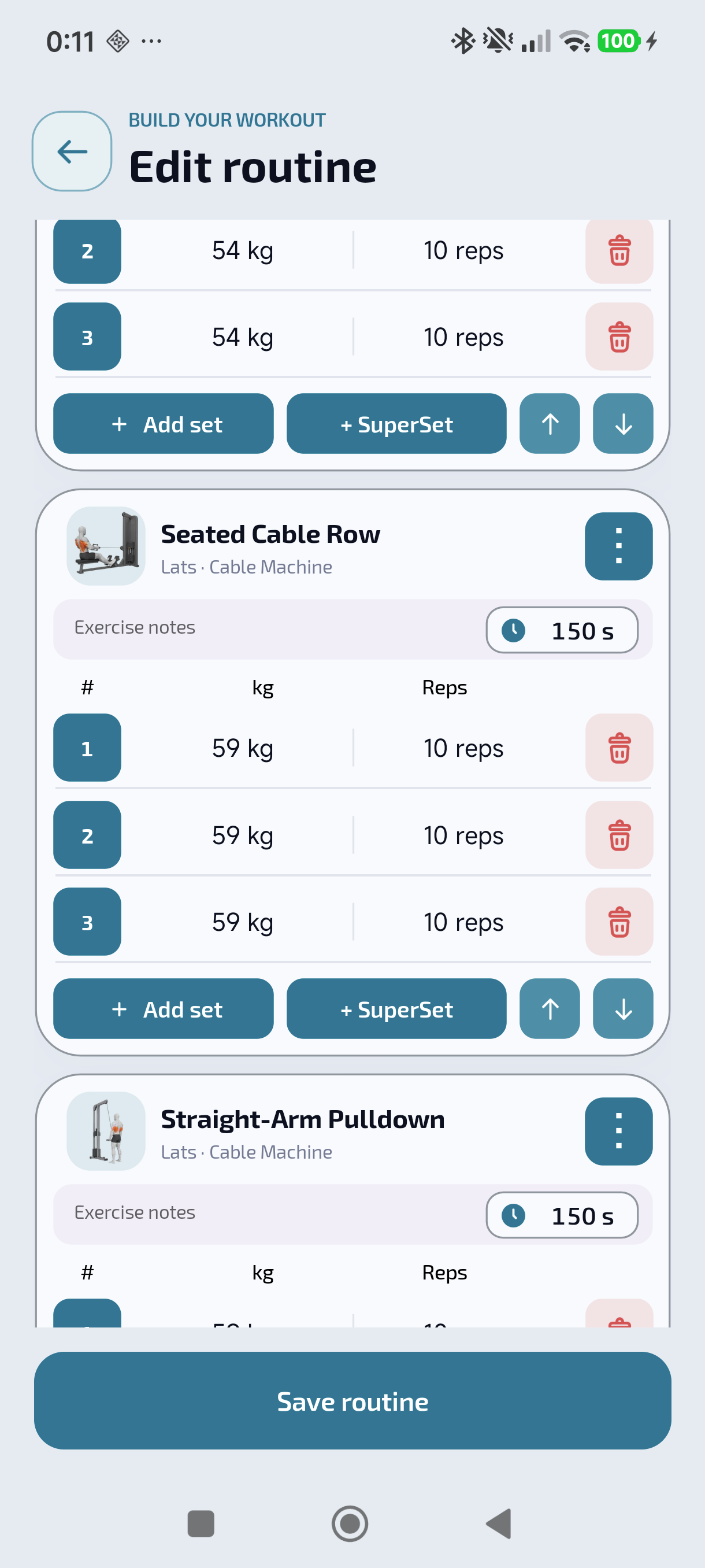
BarbellPin screenshot: configuring an exercise's sets.
Download BarbellPin