
Buying used vinyl records and staying to hear side B
Clara goes into a record shop looking for an album from her mother's living room. Two copies and a pair of headphones give her a reason to stay longer.
BarbellPin ·
Clara has a blurry photograph on her phone. She cropped it from a birthday picture, and in one corner there is a blue record sleeve leaning against a speaker. She remembers her mother playing that album on Sundays. She also remembers a song with whistling in it. With those two clues, she goes shopping for used vinyl records in a little shop she usually passes on her way to work.
The door catches a cardboard box as she opens it. Inside are handwritten dividers, a short stepladder and a stool occupied by a ceramic cat. Clara shows her photograph to the man behind the counter. He enlarges it, tilts the phone and asks whether she recognises the singer's name. As soon as he says it, she does. Until that moment, she would have sworn it was a band.
His name is Andrés. He finds one copy in a crate and another behind the counter, then lays them next to each other. One has a shiny sleeve and costs rather more than Clara meant to spend. The other has an old sticker in a corner and a pale ring worn into the cardboard. She reaches towards the first one. Already she can picture her purchase on a shelf, bringing an entire childhood Sunday home with it.

Photograph by Joyce G on Unsplash, used under the Unsplash License. The surfaces and grooves accompany the inspection of a copy. Original photograph. Usage license.
The sleeve she wanted to take home
Andrés asks what she wants from that particular edition. Clara says she wants to play it at home. Her partner has a turntable, and together they have cleared a shelf for records. So far they have bought three new albums, chosen for songs they already knew. This would be their first used record and the first she had chosen on her own. She likes the idea of bringing it home without sending a message to ask for help.
Andrés takes the records out, holding them by the edges, and explains that the shop has assessed the vinyl and the sleeve individually. The copy with the worn cardboard has the better record grade. Clara looks at the price again. She had let the outside tell her everything. She asks what the letters on the stickers mean, and he passes her the sheet the shop uses to explain its grading.
She reads it carefully. Later she also saves a link to the Discogs grading reference, where she can look up descriptions of the condition of different formats and their packaging. Having something to consult will help the next time she is facing two letters on a small sticker. Discogs condition grading.
She turns both sleeves over. One still contains its insert, while the other has lost it. The track lists match. Clara searches for a title that might suggest whistling, as though the right word could settle the matter. Andrés waits as she runs her finger down the list. At the bottom, she admits that she remembers the living-room window more clearly than any of these song titles.
Could we listen to the other side?
There is a listening station in the shop. Andrés sets up the copy Clara is considering and hands her the headphones. She puts them on, tucking her hair behind her ears. A familiar voice begins. For a few seconds she has the pleasing sensation of finding exactly what she came for. Then the chorus arrives, and she realises she has been waiting for a different tune.
She keeps listening. There is a song she remembers hearing while her mother hung sheets out on the terrace. The whistling has yet to appear. She asks to hear the second side and points out another passage she wants to check. Andrés operates the equipment. Clara stays beside the ceramic cat, looking at a wall covered in concert tickets that she barely noticed on the way in.
On side B there is an instrumental track. Its opening rhythm gets one of her feet moving. Clara checks the sleeve for the title. She came looking for a particular song, and now she wants this unfamiliar one to carry on a little longer. When it ends, she asks to hear its opening again. Andrés smiles and asks whether she has finally remembered it. She tells him she has just discovered it.
She phones her mother. A shopping trolley rattles in the background when she answers. Clara describes the blue cover and attempts the whistle she remembers. Her mother laughs. She used to whistle while changing records. Perhaps Clara has put two things together. Does she remember the enormous plant pot beside the speaker as well? Clara remembers that pot with extraordinary clarity.
They talk for another minute. Her mother confirms that she owned the album, although she often left it at a friend's flat. The record in the photograph had arrived after a shared lunch. Clara had imagined a permanent object, always in the same place on a shelf. Now she pictures it travelling between homes, inside a bag her mother would return several weeks later.

Photograph by Lee Campbell on Unsplash, used under the Unsplash License. The turntable accompanies the move from searching to listening. Original photograph. Usage license.
An album she could play on Tuesday too
Andrés asks which copy she would prefer. Clara looks again at the insert, the corner of the sleeve and the amount she planned to spend. She chooses the one she has listened to. Somebody has written a name on its old sticker. She wonders about that person for a moment, keeping the question to herself. She asks for an inner sleeve and for the shop's advice on looking after this record.
While Andrés gets the purchase ready, she notices another album by the same singer. She is tempted to buy that too, in case it contains the song she is still looking for. She pulls it partway out of the crate, then puts it back. First she wants to listen properly to the album she has just chosen. She saves the other title on her phone. Taking some of her budget home with her feels perfectly reasonable.
Her partner is making dinner when she gets back. She shows him both sides of the sleeve and starts describing everything she checked at the shop. He asks when they are going to play it. Clara stops halfway through her explanation and leaves her phone on the table. They prepare the equipment they already own, following its instructions, and choose side B.
The instrumental begins while they are slicing bread. Clara lifts a finger to announce it, and her partner turns the volume up a little. They listen to the rest of the side, allowing dinner to wait for a few minutes. Afterwards she sends her mother a photograph of the sleeve. A voice message comes back with a whistle followed by laughter. Now she recognises each of those sounds in its own right.
On Tuesday she plays it again while tidying the kitchen. The worn sleeve has found its place on the shelf. Thinking about that afternoon's gym visit, she feels like giving her next choice a little attention too. In the BarbellPin routine editor, Add exercise opens the library. Search by name, check the muscle and equipment filters, and open an exercise to read its information before adding it. The exercise library help explains the route. Clara lets the final song finish before picking up her gym bag.
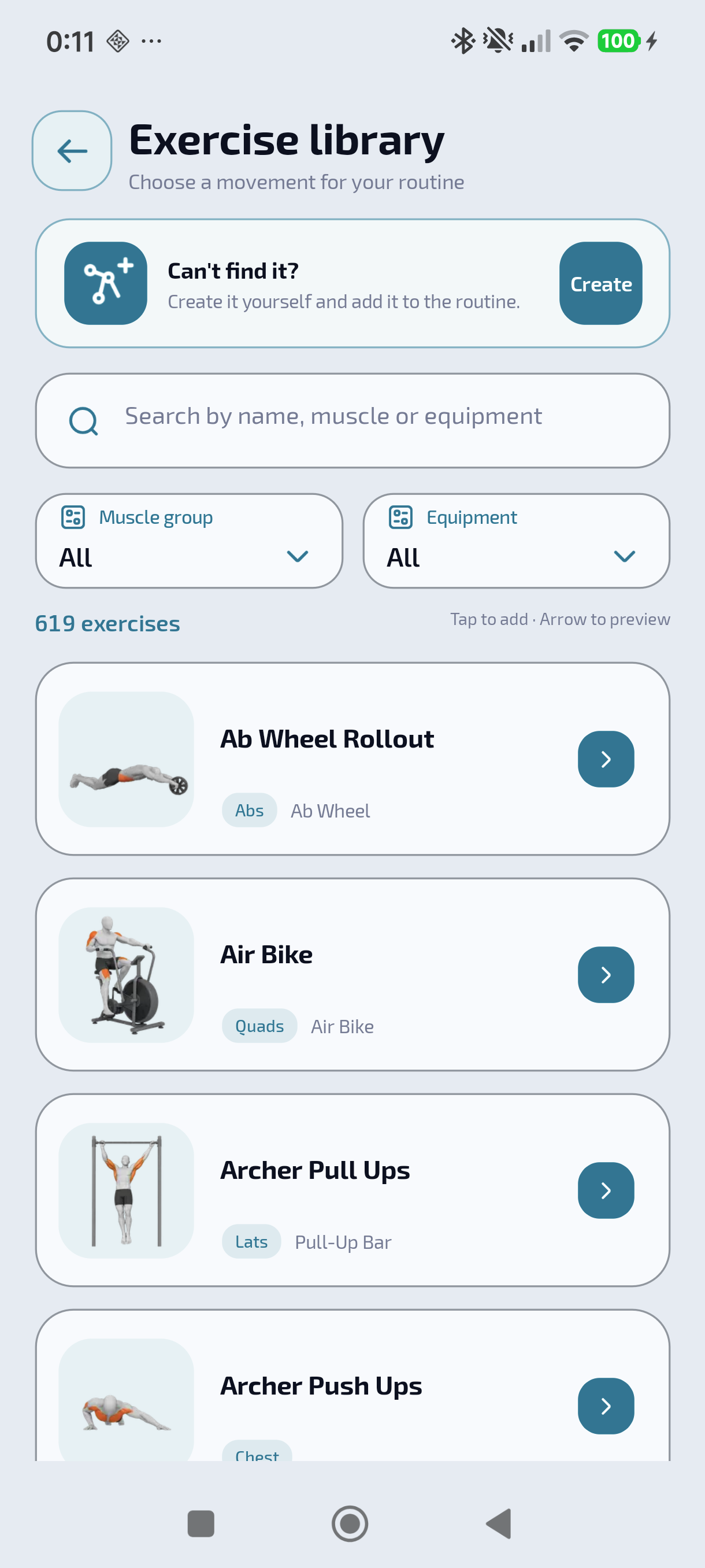
BarbellPin screenshot.
Download BarbellPin